
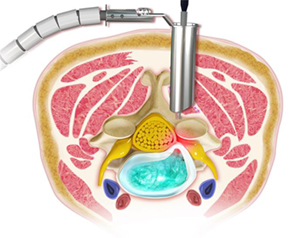
What is Minimally Invasive Ultrasonic Midline Sparing Decompression?
Minimally invasive ultrasonic midline sparing decompression is a spinal surgery technique used to relieve pressure on spinal nerves caused by conditions like spinal stenosis. This procedure is designed to minimize trauma to muscles, ligaments, and bone by using ultrasonic instruments and a midline-sparing approach - avoiding disruption of key stabilizing structures of the spine.
What are the Key Features of Minimally Invasive Ultrasonic Midline Sparing Decompression?
- Minimally Invasive: Performed through small incisions using tubular retractors and image guidance, reducing damage to surrounding tissues.
- Ultrasonic Technology: Specialized ultrasonic bone-cutting tools (e.g., ultrasonic osteotomes) selectively remove bone and soft tissue with precision while sparing nerves and dura.
- Midline-Sparing: The procedure avoids cutting through the spinous processes, interspinous ligaments, and major muscle attachments of the midline, preserving spinal stability.
- Decompression: The compressed nerve roots or spinal cord are gently decompressed by removing the offending bone or tissue without compromising the spine’s structural integrity.
What are the Indications for Minimally Invasive Ultrasonic Midline Sparing Decompression?
Common indications for minimally invasive ultrasonic midline sparing decompression surgery include conditions that cause nerve compression in the spine, such as lumbar spinal stenosis, lateral recess stenosis, and foraminal stenosis. It is also used for facet joint overgrowth, ligamentum flavum hypertrophy, and degenerative disc disease with associated nerve compression. These conditions often lead to symptoms like back pain, leg pain, numbness, or weakness, especially when conservative treatments have failed. This procedure is ideal when targeted nerve decompression is needed while preserving spinal stability and minimizing soft tissue damage.
What Does the Procedure for Minimally Invasive Ultrasonic Midline Sparing Decompression Involve?
The procedure for minimally invasive ultrasonic midline sparing decompression involves using advanced ultrasonic tools to precisely remove bone and soft tissue compressing the spinal nerves, while preserving the spine’s midline structures and stability. It is performed through a small incision using image guidance and specialized tubular retractors.
In general, the procedure involves the following steps:
- The patient is placed under general anesthesia, typically in a prone (face-down) position.
- A small (often less than 2 cm) incision is made off the midline of the back.
- A dilator and tubular retractor are inserted to gently spread the muscles without cutting them.
- Intraoperative imaging (fluoroscopy or navigation) is used to precisely locate the area of compression.
- Ultrasonic instruments (e.g., ultrasonic bone scalpel) are used to remove hypertrophic bone, ligamentum flavum, or disc material causing compression. These tools vibrate at high frequencies to cut hard tissues while sparing soft tissues like nerves and dura.
- The compressed nerve root(s) or spinal canal is decompressed while preserving key stabilizing structures like the spinous process and interspinous ligaments.
- The retractor is removed, and the small incision is closed with sutures or skin glue.
What Does Postoperative Care for Minimally Invasive Ultrasonic Midline Sparing Decompression Involve?
Following the surgery, patients are usually monitored for a short period in recovery room and may go home the same day or after an overnight stay. Pain is typically managed with oral medications, and muscle-sparing techniques used during surgery often lead to reduced discomfort. Light walking is encouraged soon after surgery to enhance circulation and prevent stiffness. Patients are advised to avoid heavy lifting, bending, or twisting for a few weeks. Follow-up appointments are scheduled to monitor recovery, and physical therapy may be recommended to improve strength and flexibility. Most individuals can return to normal activities within a few weeks, depending on their overall health and the extent of decompression performed.
What are the Risks and Complications of Minimally Invasive Ultrasonic Midline Sparing Decompression?
Risks and complications associated with minimally invasive ultrasonic midline sparing decompression include the following:
- Infection
- Nerve injury (rare due to ultrasonic precision)
- Dural tear
- Incomplete decompression
- Recurrence of symptoms
What are the Benefits of Minimally Invasive Ultrasonic Midline Sparing Decompression?
The benefits of minimally invasive ultrasonic midline sparing decompression over traditional decompression methods include the following:
- Preserves spinal stability by avoiding midline disruption
- Less postoperative pain and faster recovery
- Less blood loss and soft tissue damage
- Reduced risk of spinal instability and adjacent level disease
- Precision bone cutting with reduced risk of nerve damage due to ultrasonic technology